 Casa Grande Mobile Diesel Repair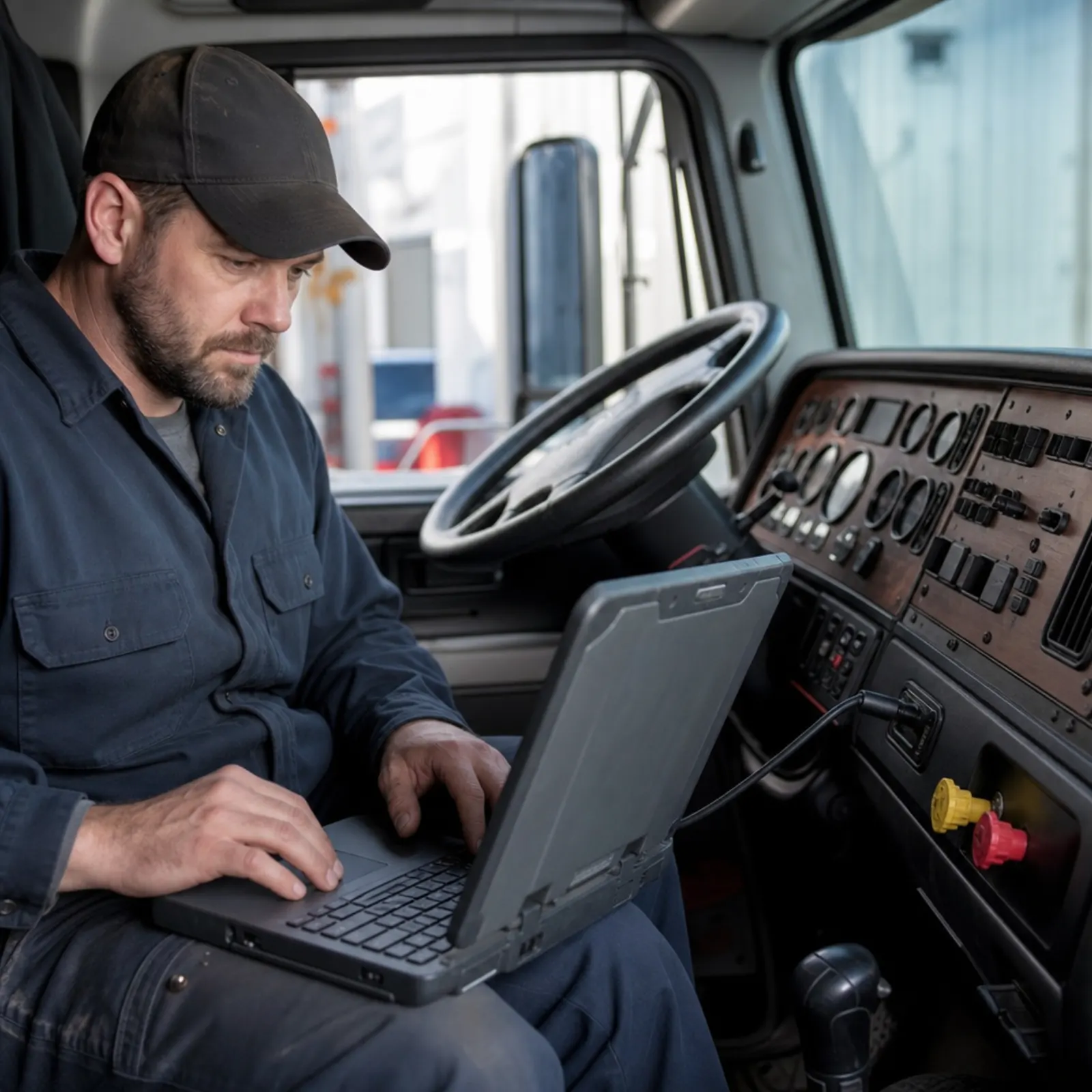
Casa Grande Mobile Diesel Repair sends our mobile diesel techs to disabled and yard-parked trucks on I-10, I-8, SR 87, SR 84, and SR 347 around Casa Grande, Arizona. The call-out fee is $150 to $350 within Casa Grande and Eloy, labor is $125 to $185 an hour with a one-hour minimum, and nights, weekends, and holidays run $250 to $500 for the call-out. Runs toward Gila Bend, Maricopa, Florence, or the Tucson side are quoted honestly by the mile. You hear the number before anyone drives out.
Give our tech four things: where you are (exit, mile marker, truck stop, or yard address), what you are driving (year, engine, and whether it is a tractor, trailer, or reefer), what it is doing, and whether you are loaded and on the clock. That is enough to quote the job and get a truck moving.
What we fix where the truck sits
- Mobile semi truck repair: no-starts, batteries, starters, alternators, fuel delivery, cooling systems, belts, hoses, and wiring, done on the shoulder or in the yard.
- Roadside breakdown service: shoulder, truck stop, and rest area response with lights and triangles out and the rate quoted before anyone drives out.
- Trailer and reefer repair: lights, ABS, air lines, brakes, landing gear, doors, mud flaps, and Thermo King or Carrier reefer units that will not pull down.
- Diesel diagnostics and check engine: laptop diagnostics for Cummins, Detroit, PACCAR, and Volvo, DPF and DEF faults, forced regens, and derates.
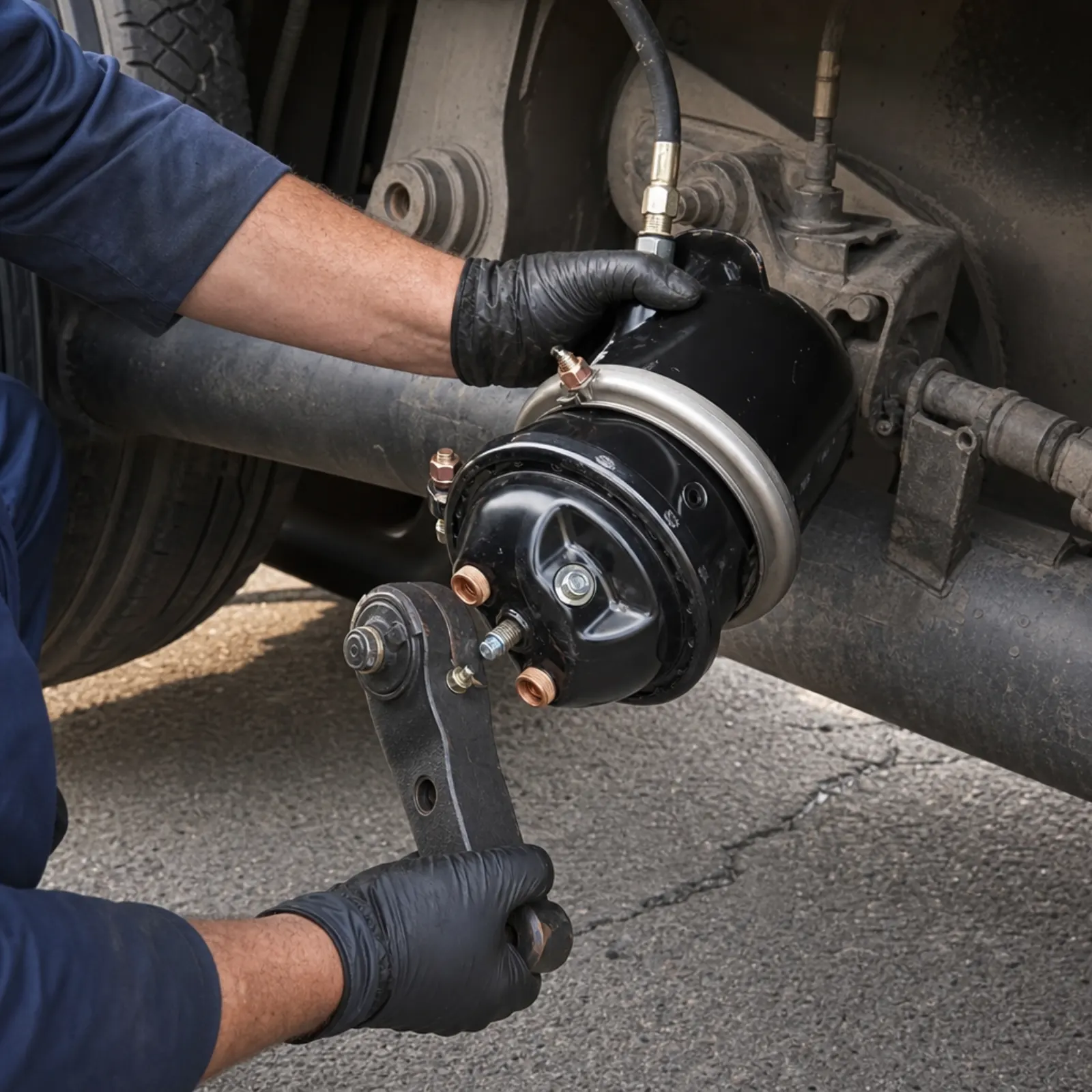
- Air brakes and air systems: leak chasing, chambers, slack adjusters, air dryers, valves, and compressors, so the truck passes a roadside inspection instead of failing one.
- Fleet PM and DOT inspections: scheduled oil, filters, grease, brake adjustments, and 49 CFR 396.17 annual inspections in your yard.
If you already know the symptom, the problems index has a page for each of the most common breakdown calls, with what is usually wrong, what it costs, and when it is a tow.
Tires are a separate trade with a separate truck. If a blowout is the whole problem, say so on the call and you will be pointed to a tire vendor instead of paying a call-out for a mechanic who cannot help. If the tire is one of several problems, our tech handles the rest.
The corridor we cover, exit by exit
Casa Grande is where I-8 ends. The trumpet interchange at I-8 exit 178 puts San Diego freight onto I-10 at exit 199, one mile east of the Jimmie Kerr Boulevard interchange at exit 198, and the whole junction sits inside Casa Grande city limits, according to AARoads’ interstate guides. Everything a truck needs is strung along the next ten miles of I-10:
| Exit | What is there |
|---|---|
| 194, Florence Blvd | Business loop into Casa Grande, the Walmart and Lucid side of town |
| 198, Jimmie Kerr Blvd | Union Pacific line, industrial frontage, one mile from the I-8 split |
| 199 | I-8 west to Gila Bend and San Diego |
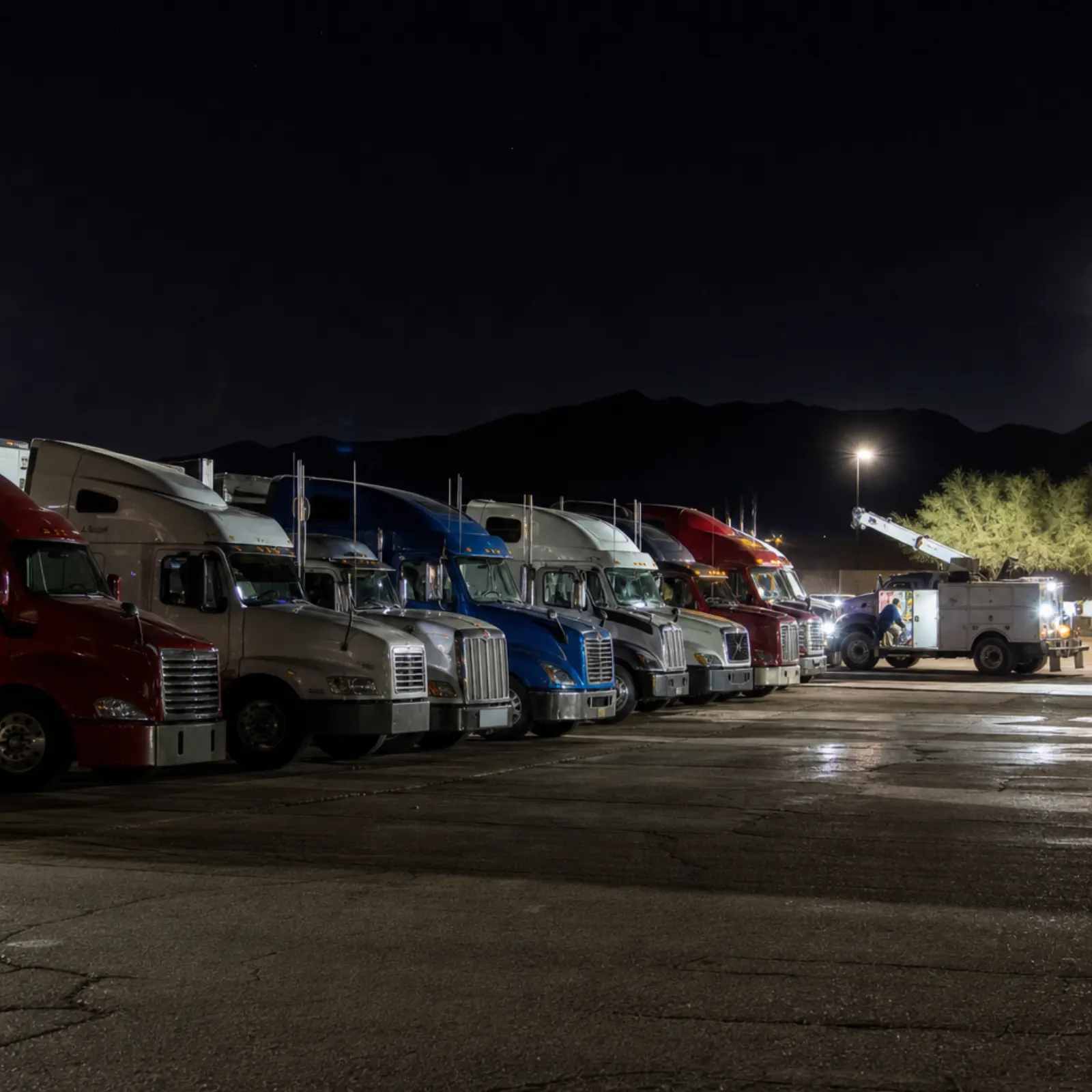
| 200, Sunland Gin Rd | Petro (175 truck spaces, 4 service bays) and Love’s (105 spaces), the turn for Arizona City |
| 203, Toltec Rd | TA Eloy (234 spaces) and Love’s (129 spaces, CAT scale, truck wash) |
| 208, Sunshine Blvd | Pilot (15 fuel lanes, Southern Tire Mart), last Eloy exit eastbound |
| 211, SR 87 | Coolidge and Florence turnoff, and ADOT’s dust radar tower |
| 219, Picacho Peak Rd | Picacho Peak State Park, the long climb toward Marana and Tucson |
Truck stop figures come from the operators’ own location pages. West of town, the Sacaton rest area at mileposts 181 to 184 is, in ADOT’s words, the only state-owned rest area between Phoenix and Tucson, and it is where a lot of trucks that limped off the road end up waiting. East of Eloy, ADOT’s dust detection system covers mileposts 209 to 219 with 13 visibility sensors and variable speed signs that drop the limit from 75 to as low as 35 mph in blowing dust. When those signs light up, a truck on the shoulder is in a bad place, and the tech comes with the beacons on.
On I-8, the exits count down west from the junction: Trekell Road at 174, Thornton Road at 172 (Lucid’s plant sits at Thornton and Peters), Montgomery Road at 167, Stanfield Road at 161, and the SR 84 and SR 347 split at exit 151. Beyond that, AARoads notes a 20.7-mile stretch with no exits at all and no services for roughly 60 miles between Casa Grande and Gila Bend. If you are broken down out there, give the mile marker; there is nothing else to describe.
The freight that keeps this corridor busy
Casa Grande’s freight base is not passing through; it is based here. The Casa Grande Chamber lists Lucid’s electric vehicle plant, the Walmart distribution center (opened 2003, more than 400 employees, supplying stores across Arizona), Abbott Nutrition, Frito-Lay, Hexcel, Daisy Brand, and a Tractor Supply distribution center, and Lucid’s campus at Thornton and Peters roads has grown to nearly 4 million square feet. Eloy runs four CoreCivic facilities with about 1,546 employees between them. Coolidge has the Inland Port Arizona on the Union Pacific, the plant Lucid bought from Nikola’s bankruptcy in April 2025, and 427 acres Procter and Gamble bought for a fabric care plant. Every one of those docks generates drop-and-hook, stop-and-go, and idling, which is exactly the duty cycle that plugs DPFs and kills batteries.
What breaks between Phoenix and Tucson
Heat. The NOAA 1991-2020 normals for the Casa Grande National Monument station put the July normal high at 105.7 degrees with a normal low of 78.7, and June and August are within two degrees of that. Pavement in direct sun runs 40 to 60 degrees hotter than the air, which puts the road surface near 160 degrees on a 110-degree afternoon, as Autoblog reported in its coverage of I-10 heat failures. That is what a loaded truck sits on for hours.
- Batteries. Heat, not cold, is what kills a truck battery in Arizona. Electrolyte cooks off, plates sulfate, and the truck that started fine at the Petro at 5 a.m. will not crank after a 30-minute stop at noon. Three or four batteries at $150 to $250 each plus $150 to $250 labor is the most common ticket on this corridor.
- Cooling. Fan clutches, water pumps, hoses, and radiators get found out on the climb from Eloy at 1,549 feet past Picacho at 1,614 feet toward Tucson at 2,388 feet. It is gradual, but it is 70 miles of it into a 105-degree headwind with 80,000 pounds behind you.
- Belts and rubber. Belts glaze and crack at these temperatures, and the tire that was marginal at the Love’s is shredding at Picacho Peak.
- Air systems. Compressors run hotter, air dryer cartridges saturate, and the leak that was a slow hiss at dawn is an out-of-service defect by afternoon. The air system page explains the CVSA 20 percent rule.
- Aftertreatment. DPF soot loads climb in stop-and-go around the distribution docks, DEF quality faults show up after a bad fill, and the derate clock starts. The diagnostics page covers what a forced regen fixes and what it does not.
The summer heat post goes through each failure in order, with what it costs.
How a call goes
- You call. Location, truck, symptom, loaded or empty, on the clock or off. Our tech asks about the engine (X15, DD15, MX-13, D13) because it decides what goes on the service truck.
- You get the number. Call-out fee, hourly rate, and ETA, with the after-hours rate stated if it applies. Nobody drives out until you say yes.
- The tech rolls. Service truck with compressor, jump pack, diagnostic laptop, common parts, lights, and triangles.
- Diagnose and repair. Laptop first for engine and ABS codes. Repair from truck stock or a parts run to the Phoenix-side suppliers (NAPA, FleetPride, Rush, Empire), with the run time quoted before the tech leaves.
- Road test and paperwork. Invoice with the fault codes and parts listed the way your fleet’s maintenance software wants them. Payment on site: EFS, Comdata, T-Chek, fleet checks, and cards.
For dispatchers and fleet managers
You are probably reading this from another state with a driver on hold. What you get from the first call: the rate, the ETA, and our tech’s read on whether the truck is fixable where it sits. What you get afterward: an invoice with VIN, unit number, fault codes, parts, and labor, plus the inspection report and sticker when the job is a DOT annual. PO numbers go on the invoice if you give them up front. Regular yard PM for local fleets is scheduled around your dispatch, including nights and weekends, and the fleet PM page lists what a visit covers.
Pricing, published
| Job | Typical range |
|---|---|
| Call-out fee, Casa Grande and Eloy | $150 to $350 |
| Call-out fee, after hours, weekends, holidays | $250 to $500 |
| Labor | $125 to $185 per hour, one-hour minimum |
| Jump start or battery replacement | $150 to $250 plus batteries at $150 to $250 each |
| Forced DPF regen and code diagnostics | $250 to $500 |
| Air leak repair | $200 to $600 plus parts |
| Brake chamber or slack adjuster | $250 to $600 per wheel end |
| Alternator or starter, installed | $600 to $1,500 |
| Fan clutch or water pump | $800 to $2,000 |
| Trailer lights and wiring | $150 to $500 |
| Reefer service call | $200 to $400 plus repair |
| PM service in the yard | $350 to $700 per truck |
| DOT annual inspection | $100 to $200 |
The pricing page has the full table, what moves each number, and the honest math on a repair versus a $600 to $1,500 tow to a dealer that will not look at the truck until it reaches the front of the line.
Who shows up
Casa Grande Mobile Diesel Repair is an independently operated local service. Arizona does not license mobile mechanics, so nobody on this corridor can wave a state license at you, and we will not invent one. What you can ask for, and should, is proof of insurance from whoever shows up, us included, plus a quoted rate before anyone drives out, which you always get here. If the truck needs a shop (a cracked head, an in-frame, a transmission out), you will hear that on the phone rather than after a call-out fee. More on how the service works is on the about page.
Where we go
Casa Grande is the base. Regular runs cover Eloy and its three truck stop exits, Arizona City and the I-8 side out to Stanfield, Maricopa up SR 347, and Coolidge and Florence on SR 87, SR 287, and SR 79. Longer runs to Gila Bend, Stanfield, Picacho, Marana, and the Sacaton rest area are quoted by the mile on the same call.
Broken down now? Call with your exit or mile marker. Planning yard work? Call with your truck count. Questions first? The FAQ answers the common ones.