 Casa Grande Mobile Diesel Repair
 Roadside Breakdown Service on I-10 and I-8 Around Casa Grande
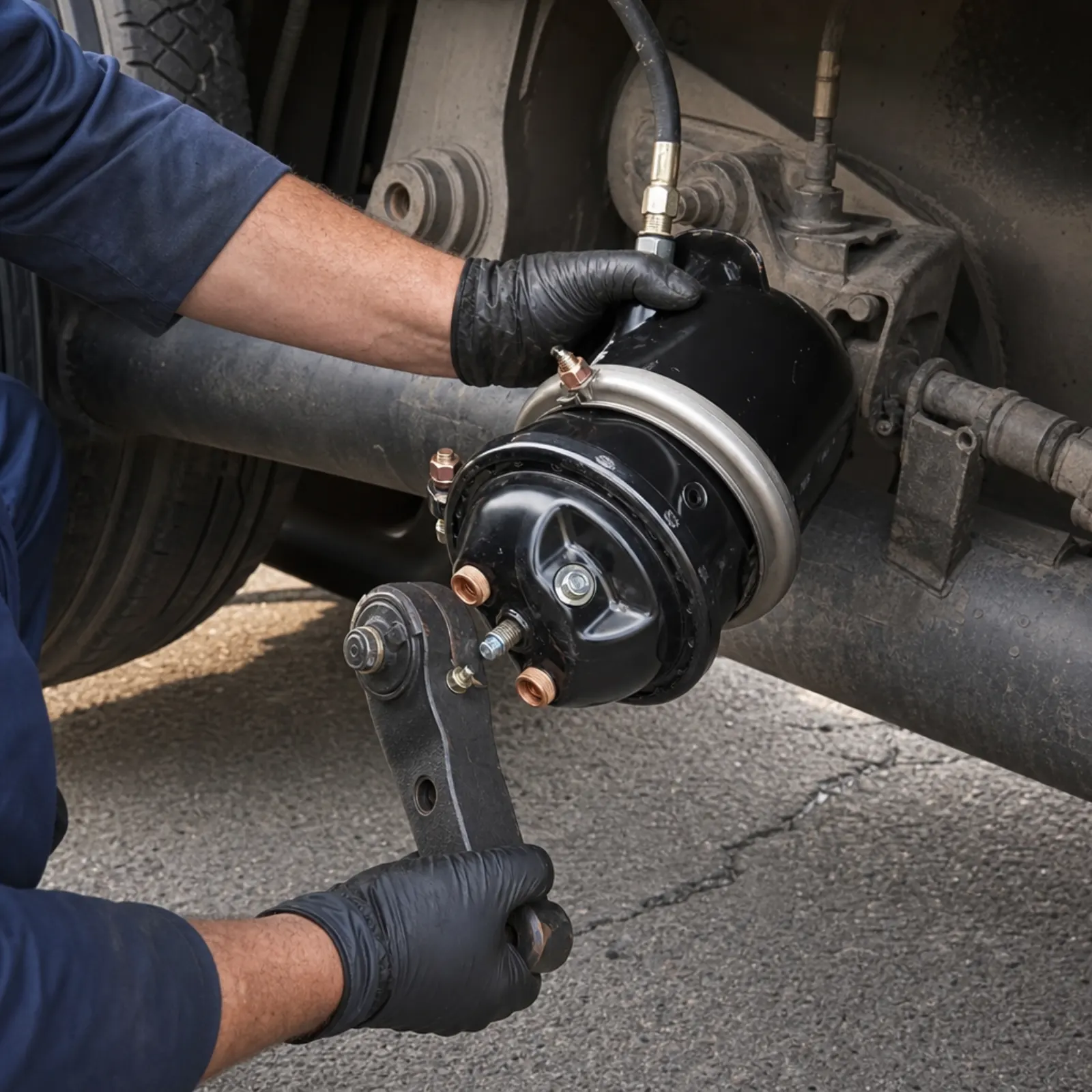
One of our techs can come out to a broken-down truck on I-10, I-8, or SR 87 around Casa Grande, with the call-out fee ($150 to $350 in Casa Grande and Eloy, $250 to $500 after hours) and the labor rate ($125 to $185 an hour) quoted before the service truck leaves. Tell us where you are by exit or mile marker, what the truck is, what it is doing, and whether you are loaded. You get an ETA and a number on the same call.
Roadside is a different job from yard work. The truck is where it stopped, traffic is moving at 75 mph a few feet away, and in summer the pavement is near 160 degrees. This page is about how those calls actually get handled on this corridor.
Where the calls happen
Casa Grande sits at the I-10 and I-8 junction, and the breakdown geography is specific:
- I-10 west of town. The Sacaton rest area at mileposts 181 to 184, which ADOT describes as the only state-owned rest area between Phoenix and Tucson, is where a lot of trucks that started losing power in the Gila River stretch pull off. From there to the Casa Grande exits is a 10-to-13-mile run.
- The Casa Grande exits. Florence Boulevard at 194, Jimmie Kerr Boulevard at 198, the I-8 split at 199, and Sunland Gin Road at 200. The Petro (175 truck spaces) and Love’s (105 spaces) at exit 200 are the first real truck stops eastbound after the junction.
- Eloy. TA (234 spaces) and Love’s (129 spaces, CAT scale) at Toltec Road, exit 203, and the Pilot at Sunshine Boulevard, exit 208, which AARoads notes is the last Eloy exit eastbound. Between them and Picacho is the stretch where trucks that “just need to make Tucson” usually stop making it.
- The dust zone and the climb. ADOT’s dust detection system covers mileposts 209 to 219 with 13 visibility sensors, a weather radar on a 20-foot tower at the SR 87 interchange, and variable speed signs that drop the limit from 75 to as low as 35 mph. Past Picacho Peak Road at exit 219 the road keeps climbing toward Red Rock (226), Pinal Air Park Road (232), and Marana.
- I-8. From the exit 178 trumpet, the exits fall away west: Trekell 174, Thornton 172, Bianco 169, Montgomery 167, Stanfield 161, and SR 84 and SR 347 at 151. AARoads notes a 20.7-mile stretch with no exits after that and roughly 60 miles without services between Casa Grande and Gila Bend. Trucks that break out there call with a mile marker and wait; our tech quotes the run honestly.
What a roadside call fixes
The failures that strand trucks on this corridor are mostly the ones a service truck can fix in place:
- No-start after a stop. Heat-killed batteries, a starter that heat-soaked, a loose or corroded cable. Load test first, then replace what failed. Batteries $150 to $250 labor plus $150 to $250 each. The semi truck repair page covers charging and starting in detail.
- Overheating on the climb. Belt, fan clutch, hose, water pump, low coolant from a leak that has been weeping for a week. Belts and hoses are truck stock; a fan clutch or water pump is $800 to $2,000.
- Air leak or low air. A hiss at a chamber, a chafed line, a failed valve or dryer. Under CVSA criteria an audible leak at a chamber is a defective brake, and two defective brakes on a five-axle combination puts it out of service. Leak repair runs $200 to $600 plus parts; chambers and slack adjusters $250 to $600 per wheel end. The air system page has the rest.
- Check engine, derate, or 5 mph. Laptop on, read the code, decide on the spot whether a forced regen or a fault clear will hold or whether a sensor or doser is behind it. $250 to $500. The diagnostics page explains the derate stages.
- Lights, wiring, trailer faults. Lamps, pigtails, ABS faults, air lines to the trailer, landing gear that will not crank. $150 to $500 for most light and wiring work; see trailer and reefer repair.
- Fuel. Clogged filters, air in the lines, water. Filters and priming on site.
Tires are a separate vendor. If the blowout is the whole problem, say so and you get pointed to tire service instead of paying a mechanic’s call-out. If the blowout took out an air line, a mud flap, and a marker light with it, that is a mobile mechanic’s job.
Safety on the shoulder
Our tech arrives with beacons and triangles and sets up on the safe side of the truck. In summer, that has two extra layers on this corridor. First, heat: the NOAA 1991-2020 normals for the Casa Grande National Monument station put July at a 105.7-degree normal high, and pavement runs 40 to 60 degrees hotter than the air per Autoblog’s reporting. Drivers waiting on the shoulder should stay hydrated and out of the sun; our tech will tell you if the repair will take long enough that a move to the next exit makes sense. Second, dust: when the ADOT variable speed signs between mileposts 209 and 219 are lit, visibility can drop to nothing in seconds, and a truck on the shoulder becomes a hazard to everyone. Our tech will ask, and the honest plan in a haboob is often a short, careful move rather than a repair in the dust.
What to tell our tech
- Location. Exit number, mile marker, direction of travel, which truck stop, or a yard address. “Near Eloy” is not enough; “eastbound, mile marker 205” is.
- The truck. Year, make, engine (X15, DD15, MX-13, D13), and whether the problem is on the tractor, the trailer, or the reefer.
- The symptom. Will not crank, cranks and will not start, derate light, air pressure dropping, temperature climbing, lights out.
- Loaded or empty, and the clock. A loaded reefer changes the priority, and a driver near the end of hours changes the plan.
- Payment. EFS, Comdata, T-Chek, fleet check, or card, and a PO number if your fleet wants one on the invoice.
With that, you get the call-out, the rate, and the ETA, and nothing moves until you say yes.
When the tow is the right answer
Some failures do not get fixed on a shoulder: an in-frame, a cracked head, a transmission or rear end, a fifth wheel or frame failure, a fire. If the symptom on the phone already says that, you hear it on the phone and you are not charged a call-out to be told in person. If the diagnosis on site finds it, you get the finding, the reasoning, and help arranging a tow if you want it. A Class 8 tow to Phoenix or Tucson runs $600 to $1,500 and then the shop’s queue takes over, which is exactly why the goal is to fix on site everything that can honestly be fixed on site.
Pricing
| Item | Range |
|---|---|
| Call-out, Casa Grande and Eloy | $150 to $350 |
| Call-out, nights, weekends, holidays | $250 to $500 |
| Picacho, Arizona City, Maricopa, Coolidge, Florence | Top of range plus mileage, quoted |
| Gila Bend, Red Rock, Marana, Sacaton rest area | Quoted by the mile |
| Labor | $125 to $185 per hour, one-hour minimum |
Want the range for your exit before you dial? The roadside call-out estimator builds it from these same published numbers in three dropdowns, with no email and no signup.
The full repair table is on the pricing page. Arizona does not license mobile mechanics, and we claim no license. Call with your exit or mile marker.
Frequently Asked Questions
What does a roadside breakdown call cost near Casa Grande?
The call-out is $150 to $350 between Casa Grande and Eloy, $250 to $500 at night, on weekends, and on holidays, plus $125 to $185 an hour of labor with a one-hour minimum. Picacho, Red Rock, Maricopa, Florence, and the I-8 side past Stanfield add mileage that is quoted on the call. Every number is stated before a service truck heads out.
Where exactly do you respond?
The I-10 shoulder from the Sacaton rest area at mileposts 181 to 184 east past Picacho Peak, the Eloy truck stops at exits 200, 203, and 208, I-8 from the exit 178 junction west to Stanfield, and SR 87, SR 287, SR 84, and SR 347. Longer runs toward Gila Bend and Marana are quoted by the mile. Give the exit or mile marker and our tech will tell you the ETA.
What should I do while I wait on the shoulder?
Get as far right as the shoulder allows, put out your triangles at the intervals the FMCSA requires, keep your flashers on, and stay out of the traffic side of the truck. If you are inside ADOT's dust zone between mileposts 209 and 219 and the variable speed signs are lit, tell our tech; the plan may be a short move to the next exit before work starts. Have the year, engine, and symptom ready.
What if the truck cannot be fixed roadside?
You hear that on the phone if the symptom already says so, and on site if the diagnosis finds it. In either case you get a straight answer about what the truck needs and help arranging a tow if you want it. A Class 8 tow to Phoenix or Tucson runs $600 to $1,500, so the point of the call is to make sure you only pay for it when it is the right answer.
More diesel services
Areas we serve
- Casa Grande, AZ
- Mobile Diesel Repair in Arizona City, Arizona
- Mobile Diesel Repair in Coolidge, Arizona
- Mobile Diesel Repair in Eloy, Arizona
- Mobile Diesel Repair in Florence, Arizona
- Mobile Diesel Repair in Gila Bend, Arizona
- Mobile Diesel Repair in Marana, Arizona
- Mobile Diesel Repair in Maricopa, Arizona
- Mobile Diesel Repair in Picacho, Arizona
- Mobile Diesel Repair in Stanfield, Arizona